Buying a home with a cesspool in Hawaii: what should you know?
Cesspools are very common in Hawaii because of the porous volcanic rock. Hawaii requires all cesspools to be converted to septic or sewer by 2050, so if you're buying a home with one, it's worth knowing what you have.
Serving Kona, Hilo and the whole island.
What is a cesspool?
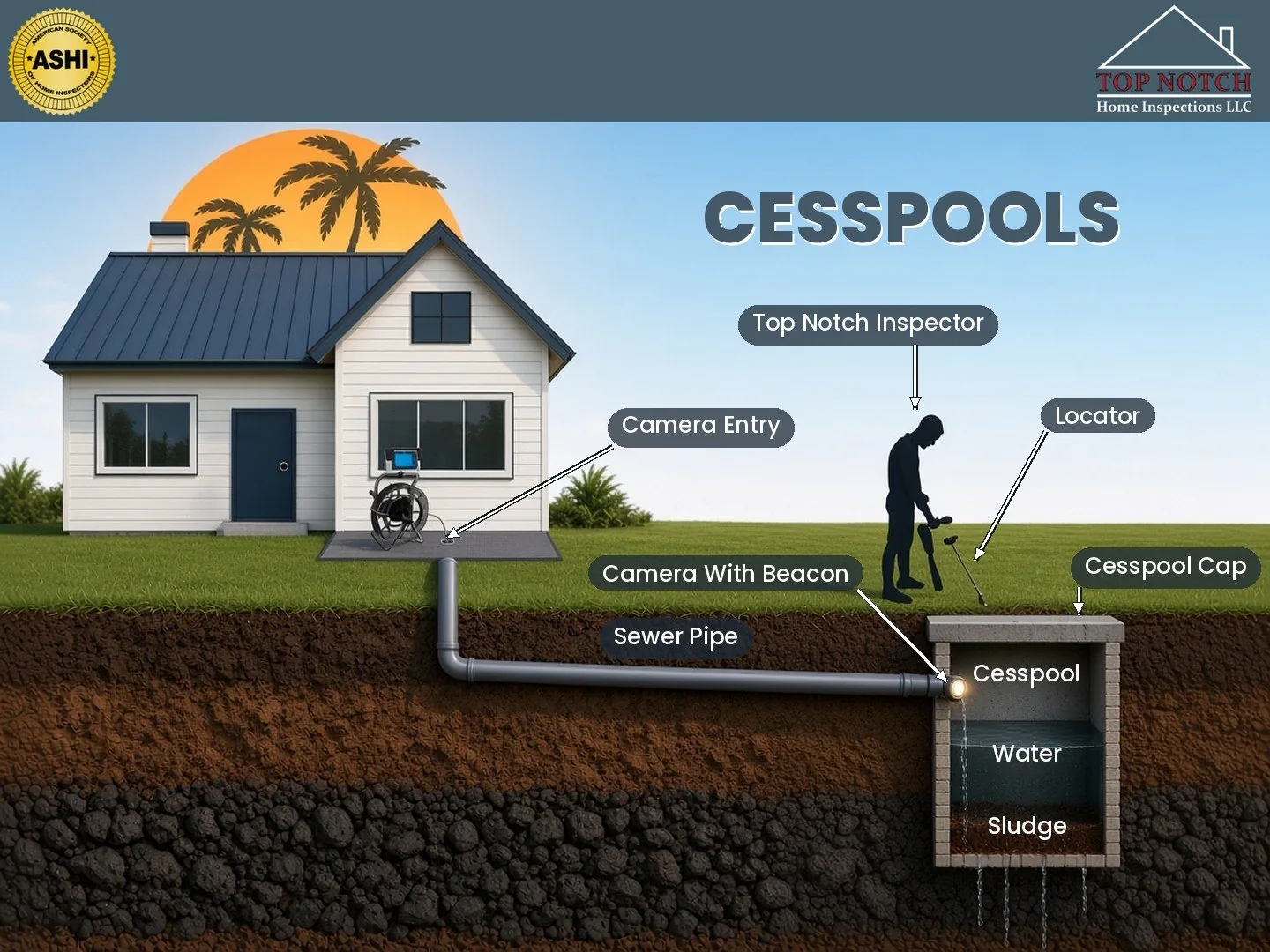
A cesspool is a type of sewage system. Think of it as a primitive, less environmentally friendly septic tank: a large pit in the ground where all the waste and sewage goes when you run water or flush the toilet. Cesspools are very common in Hawaii because of the porous volcanic rock. The cap is typically buried 1-3 feet below the surface, and most are about 8-10 ft in diameter and 8-20 ft deep.
How do cesspools work?
Waste enters the cesspool and slowly seeps through the walls into the ground. A cesspool depends on the rock or masonry lining staying porous. Grease and oil can clog the pores so water can't drain, which can cause overflow and failure.
Will I have to convert my cesspool?
Hawaii requires all cesspools to be converted to septic or sewer by 2050, and new cesspools can't be installed. If you pull permits for renovations, you may be required to convert first.
How Top Notch checks a cesspool
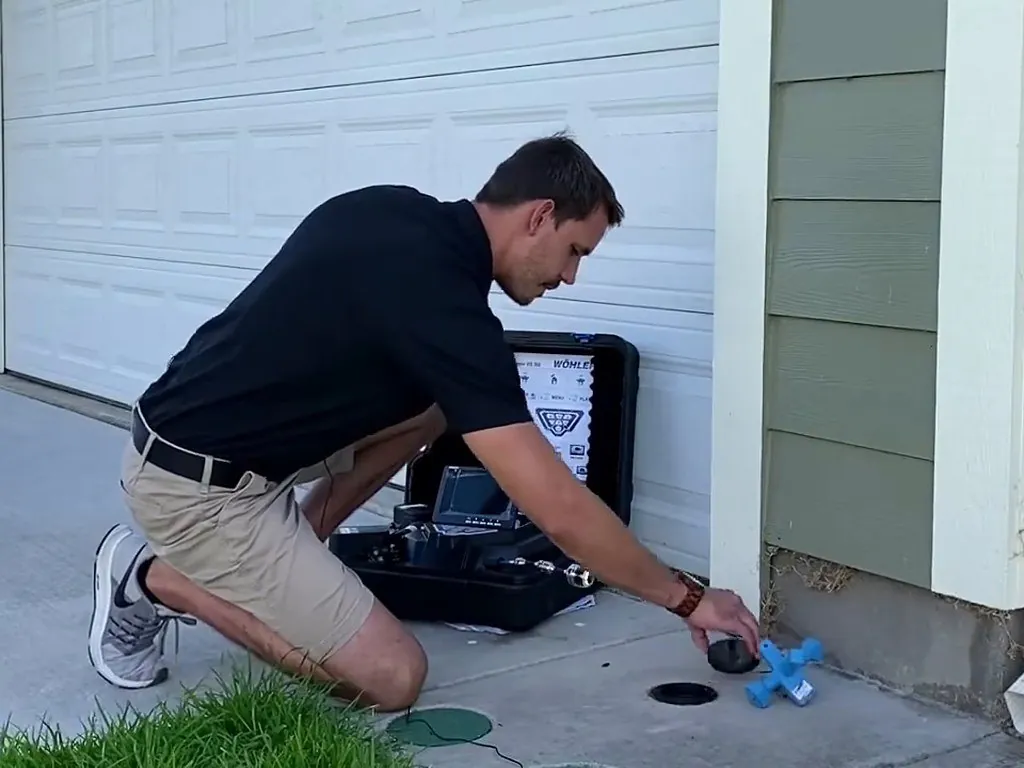
We run a sewer scope camera from the home's cleanout, through the sewer line and out to the cesspool. The camera records the line on the way, and once it reaches the cesspool we can see the water and sludge level, which helps show whether the cesspool is draining and working well. The camera has a built-in locating beacon, so we can usually locate the cesspool during the inspection. It's non-invasive, no digging is needed, it typically takes 20-30 minutes, and it can be added to your home inspection. A sewer scope can't show the cesspool's sidewalls, so if something looks wrong we'll tell you, and a cesspool specialist can take it from there.
A sewer scope is $285 as an add-on to your home inspection, or $350 stand-alone.
When should I have it checked?
Any time you're buying a home with a cesspool, we strongly recommend a sewer scope. You want to find a problem with the cesspool or drain line before you take ownership, not after. It's also worth a look if you notice drainage problems or anomalies in the yard, like dead grass or sunken ground.
What not to put down the drain
- Grease and oils
- Feminine products
- Paper towels
- Paint
- Grout
- Concrete
Questions
Cesspool Inspections: common questions
Do cesspools need maintenance?
Usually not if treated well: keep grease, wipes, paper towels, paint and grout out.
Will I have to convert?
By 2050 under state law, or sooner if renovation permits trigger it.
Pairs well with
Related services
Ready to book your inspection?
Send a booking request online in a few minutes, or call and talk to a real person. Same-day reports, every time.